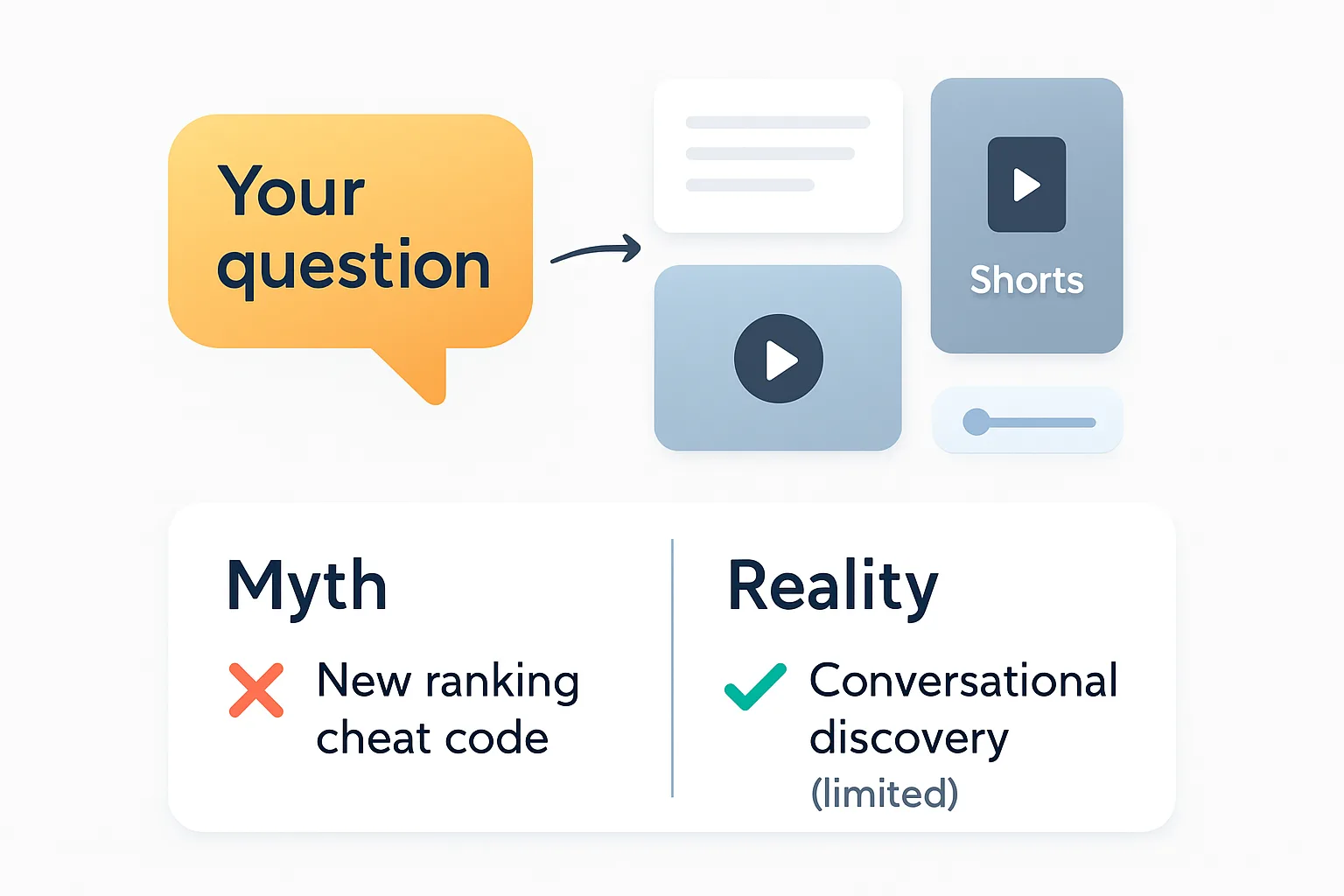
Misconception: Ask YouTube is a new creator shortcut. If you write the “right” title, add a few chapters, and answer the question early, the feature will automatically lift your video.
Reality: Ask YouTube is an experimental conversational search experience that sits alongside standard Search. As of Aug. 5, 2026, YouTube’s public documentation still does not disclose a new ranking formula, a guaranteed optimization trick, or a required creator format.
Ask YouTube changes how viewers ask questions and browse results more than it changes what YouTube has publicly documented about ranking.
The feature is worth tracking, but not overreading.
What the feature actually shows
YouTube’s current Help page says Ask YouTube accepts natural-language questions and lets viewers refine the search with suggested follow-ups or new questions. The response can mix several result types instead of showing only one kind of video card. That mix may include text, long-form videos, Shorts, and relevant clips from videos. A clip can begin at a timestamp that YouTube considers relevant to the question.
For current product wording and eligibility details, see the Ask YouTube Help page.
| What YouTube has documented | What creators should not assume |
|---|---|
| Users can ask questions in natural language and follow up with refinements. | Every question maps to a separate creator-facing ranking system. |
| Responses may combine text, long-form videos, Shorts, and clips. | Every format has an equal or guaranteed chance to appear. |
| Clip selection is described as similar to standard Search and based on relevance, engagement, and quality. | YouTube has disclosed a new Ask YouTube formula. |
| The feature is limited and expanding gradually. | All viewers, devices, and channels can use it the same way right now. |
| Playlists and Premium-exclusive content are not currently eligible. | Anything inside YouTube can surface in Ask YouTube results. |
Availability has changed during rollout
Ask YouTube has not had one fixed access stage. The May launch framing described a limited test for US Premium members through YouTube’s experimental features. A later TeamYouTube notice said the experience was expanding to signed-in US viewers aged 13 and older using English-language searches on desktop. The current Help page, as of Aug. 5, 2026, says availability is limited to a US English rollout and may expand gradually, while also mentioning computer or TV access.
That shifting wording is why older posts and screenshots can mislead. The safest reading is simple: Ask YouTube is still rolling out, and the access details have already changed during the launch period. Do not assume that one rollout description applies to every viewer, device, or account type.
Standard Search remains available, so Ask YouTube is an additional interface, not a replacement.
What it does not prove about creator SEO
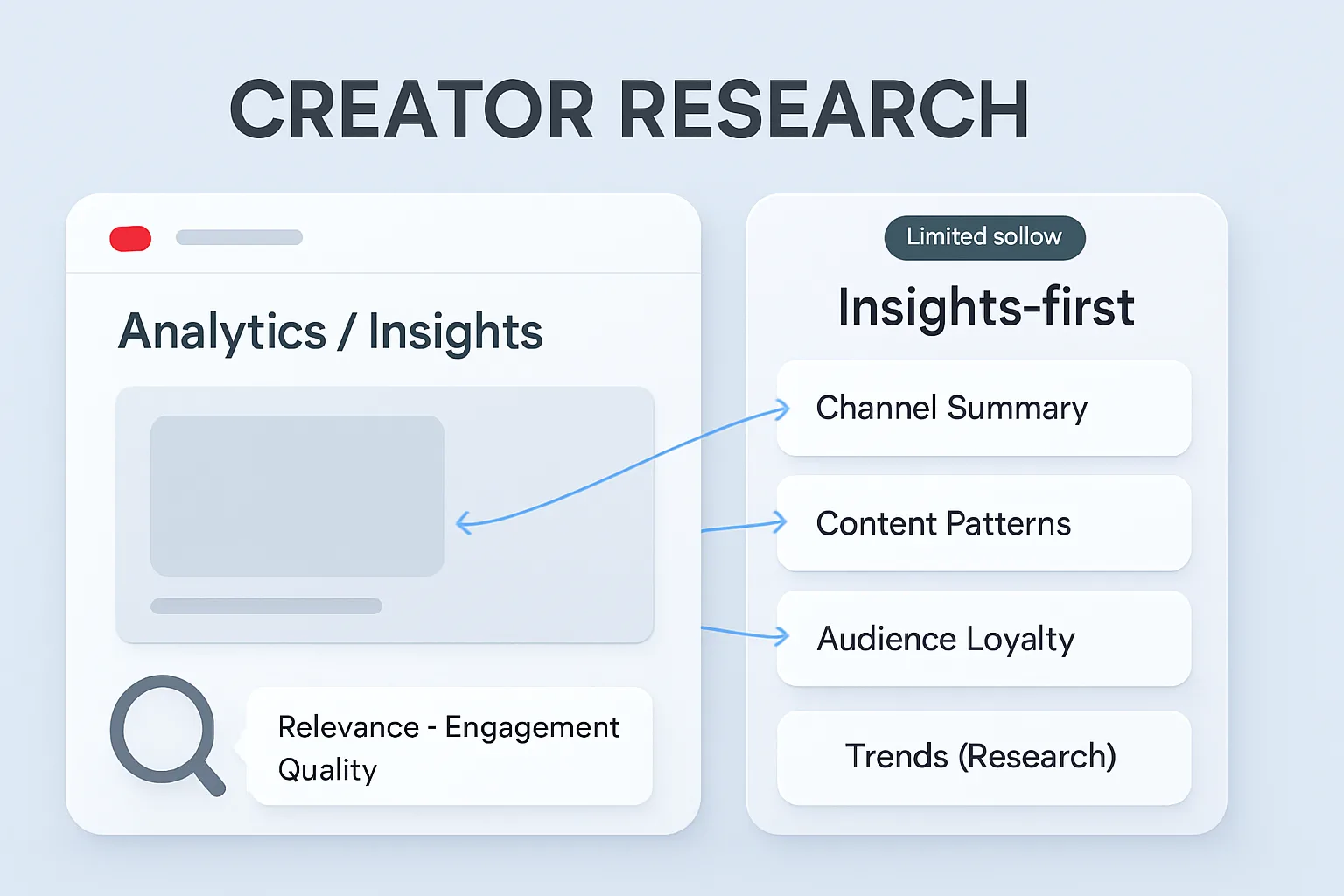
YouTube’s standard Search documentation says ranking considerations include relevance, engagement, and quality. It also explains that relevance can involve matches to titles, tags, descriptions, and video content, while engagement can include query-specific watch time. Ask YouTube uses similar language when describing how clips are selected, but that is not the same thing as a disclosed ranking formula.
That distinction matters. The reviewed material does not show that creators need a special title pattern, a specific chapter structure, a minimum video length, or a particular retention threshold to appear in Ask YouTube responses. It also does not prove that conversational search has rewritten YouTube SEO.
YouTube’s standard Search help page is useful here because it shows the documented baseline that Ask YouTube is being compared with.
Editorial note: “Helps systems match a question” is a reasonable way to think about discoverability. It is not proof that any one packaging tactic guarantees inclusion.
Practical choices creators can make without overreading it
- Keep a dated record of when Ask YouTube appears for your channel or audience.
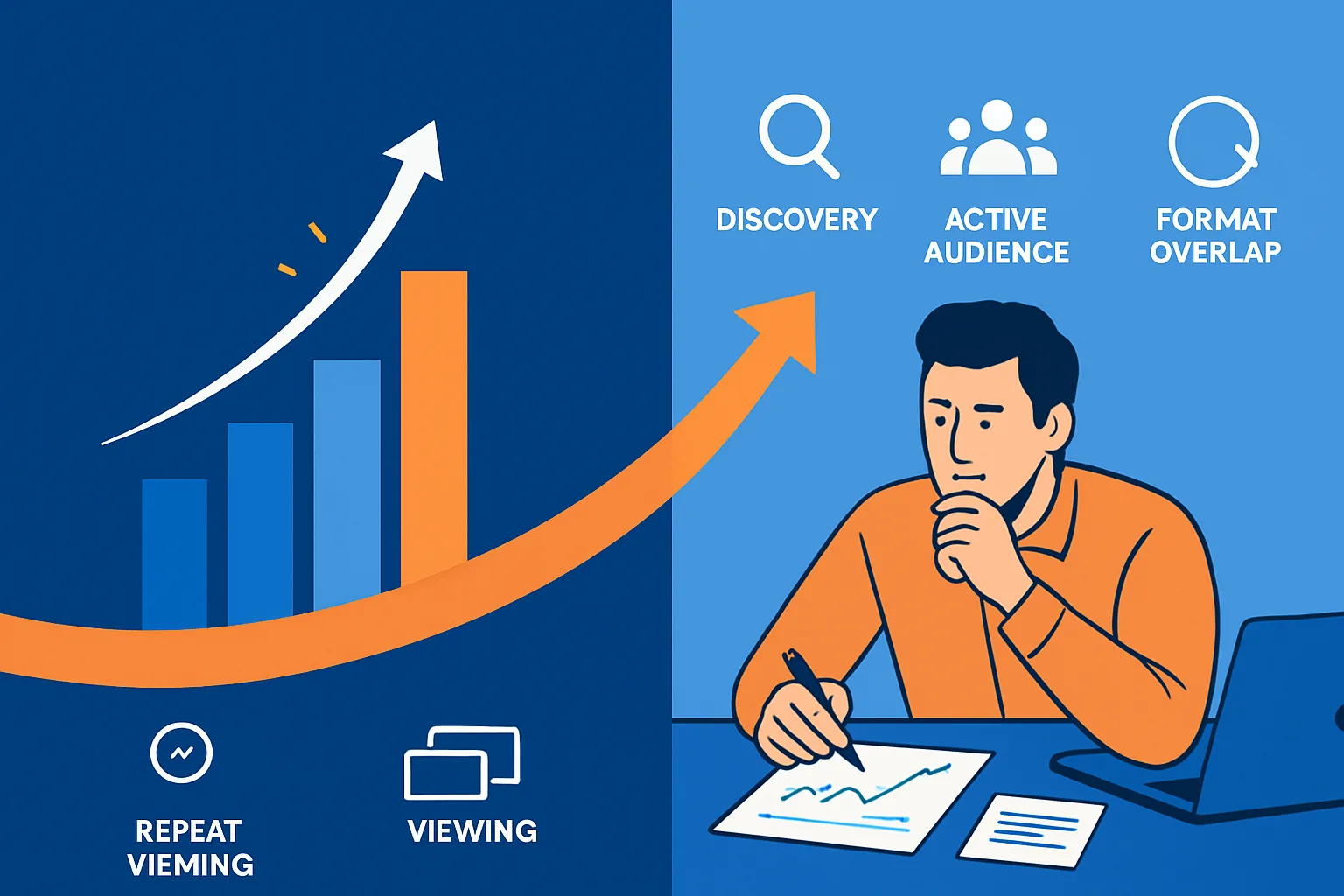
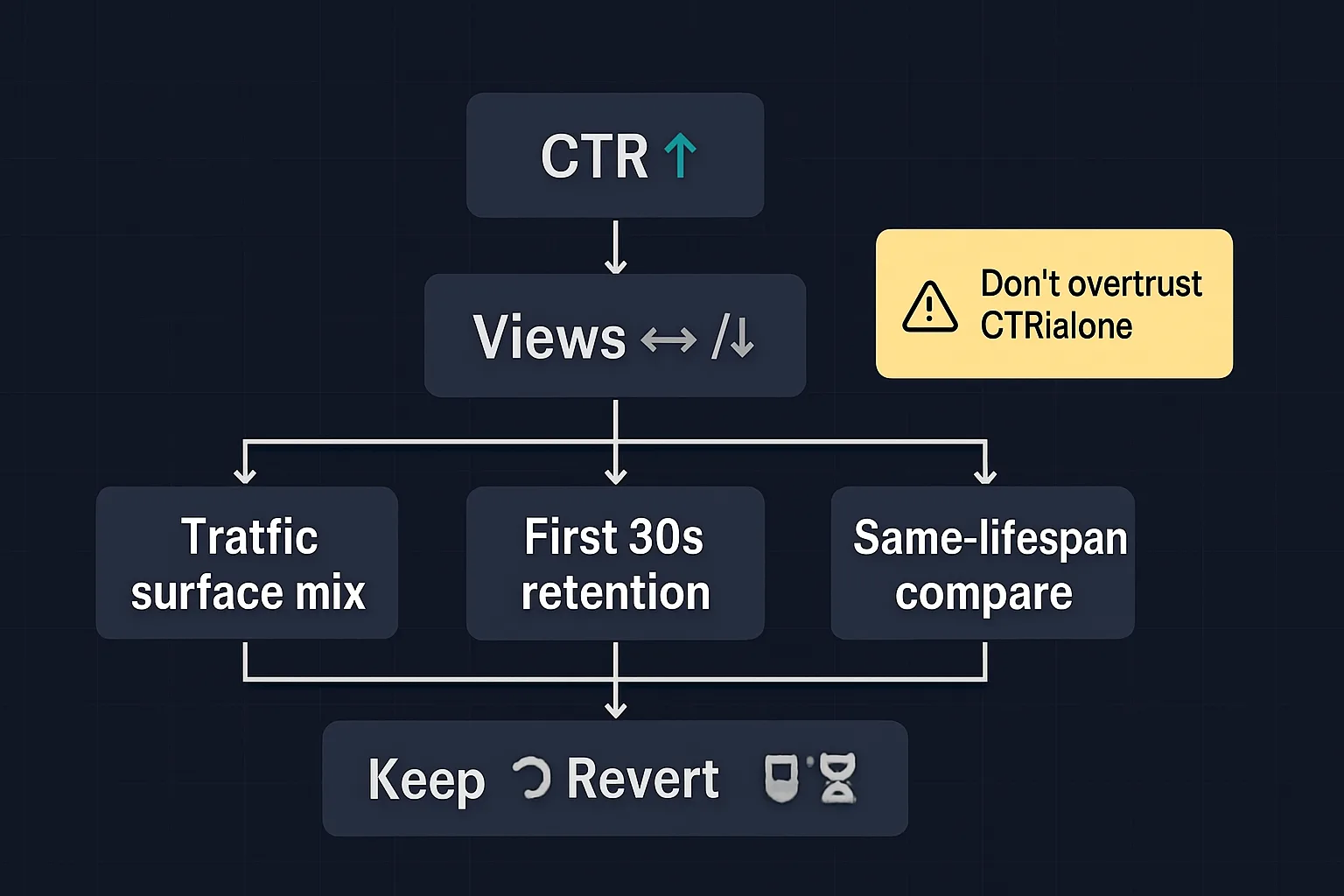
- Compare Search traffic over matched periods instead of treating one spike as proof of Ask YouTube exposure.
- Use YouTube Analytics to review Reach, traffic sources, comparisons, and exports, while remembering that the reviewed docs do not show a dedicated Ask YouTube reporting category.
- Plan content around clearly stated viewer questions, but treat that as good packaging—not a documented ranking rule.
The useful takeaway is cautious, not dramatic: treat Ask YouTube as a live product experiment that may influence how viewers discover clips and videos, but keep your planning grounded in what YouTube has actually documented so far. The general YouTube Analytics overview is the right place to understand the reporting tools and their limits.