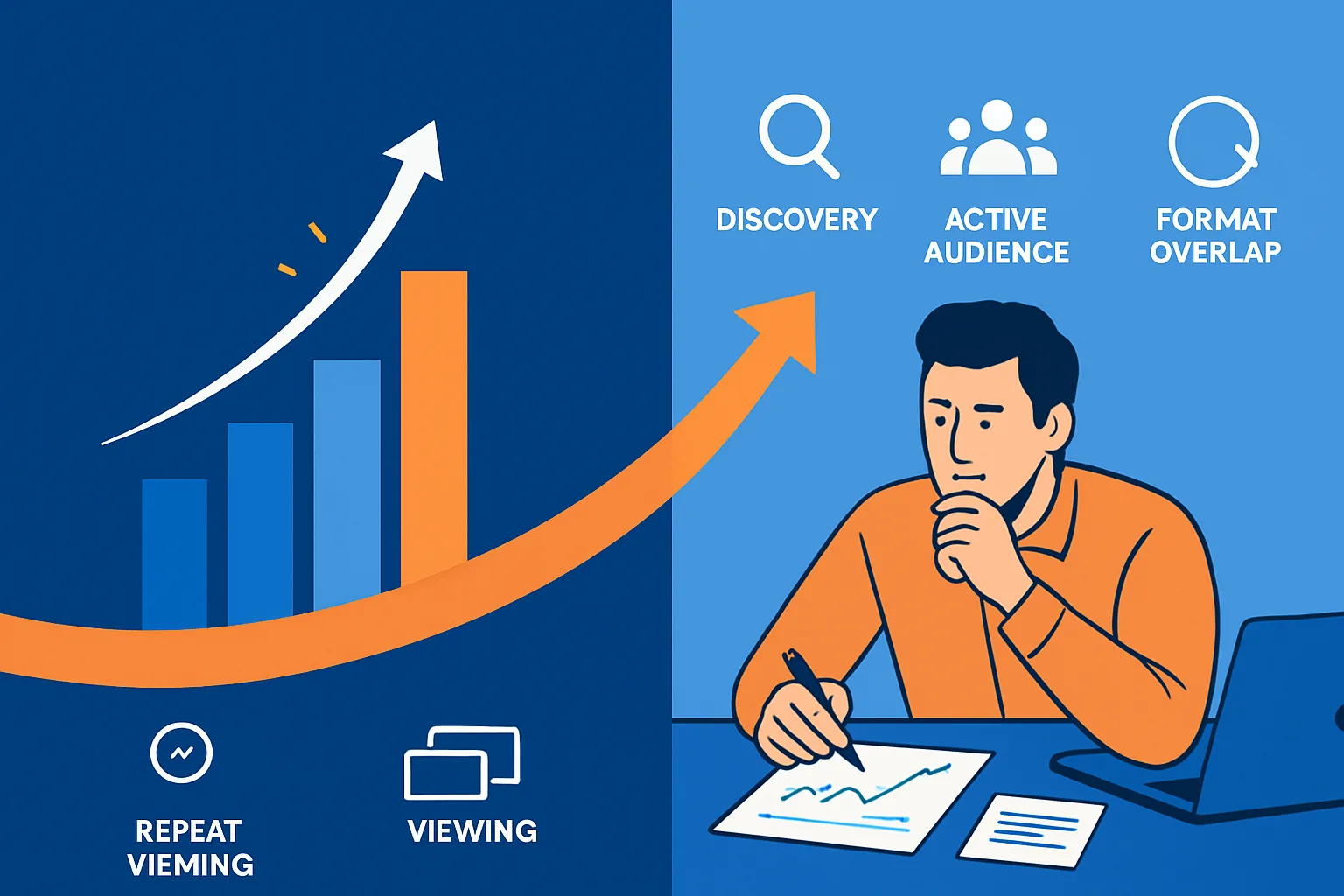
A disappointing YouTube upload often makes the publishing time look guilty. Changing the day or hour may feel like a simple fix, but it is only a hypothesis. Before changing your YouTube upload schedule, define the outcome you want and check whether your data can distinguish timing from topic, format, packaging, seasonality, audience mix, and production capacity.
Timing means different things for different YouTube formats
For ordinary videos, publish time is not an established long-term performance lever. YouTube says publish time is not known to affect ordinary videos’ long-term performance. That does not prove a particular channel can never observe a difference. It does mean that one weak or strong upload is not enough to identify the clock as the cause.
The question is different when viewers are expected to attend at a specific moment. A livestream depends partly on live participation, while a Premiere creates an event with a public watch page, reminders, notifications, and chat. Timing is therefore relevant to attendance planning for these formats, although a convenient time does not guarantee a better result.
Define the objective before reading the data
- Ordinary-video discovery
- Treat publishing time as context rather than a proven long-term reach lever. Early performance may not represent the video’s eventual discovery.
- Premiere or livestream attendance
- Choose timing partly around participation because viewers are being invited to watch or interact at a particular moment. Attendance and live metrics answer a different question from ordinary upload views.
- Audience availability
- The audience-availability report describes when viewers were online across YouTube during the previous 28 days. It can inform event planning, but it does not forecast impressions, recommendations, or views for a specific upload.
Use the audience-availability report as a description of recent audience context, not as a promise that the busiest period is the best time to publish. Geography, the formats viewers watch, and viewer groupings such as new, casual, and regular viewers can make the pattern more useful—but they do not isolate timing causation on their own.
Pass the schedule-change evidence gate
Decide whether the proposed change concerns long-term discovery, early launch response, Premiere attendance, livestream participation, series continuity, or workflow sustainability.
Keep ordinary Videos, Shorts, Live, and Premieres separate. Different audience behavior means a mixed-format result cannot cleanly answer an ordinary-video timing question.
Review viewer availability, geography, format preferences, and audience groupings to understand the setting around the decision.
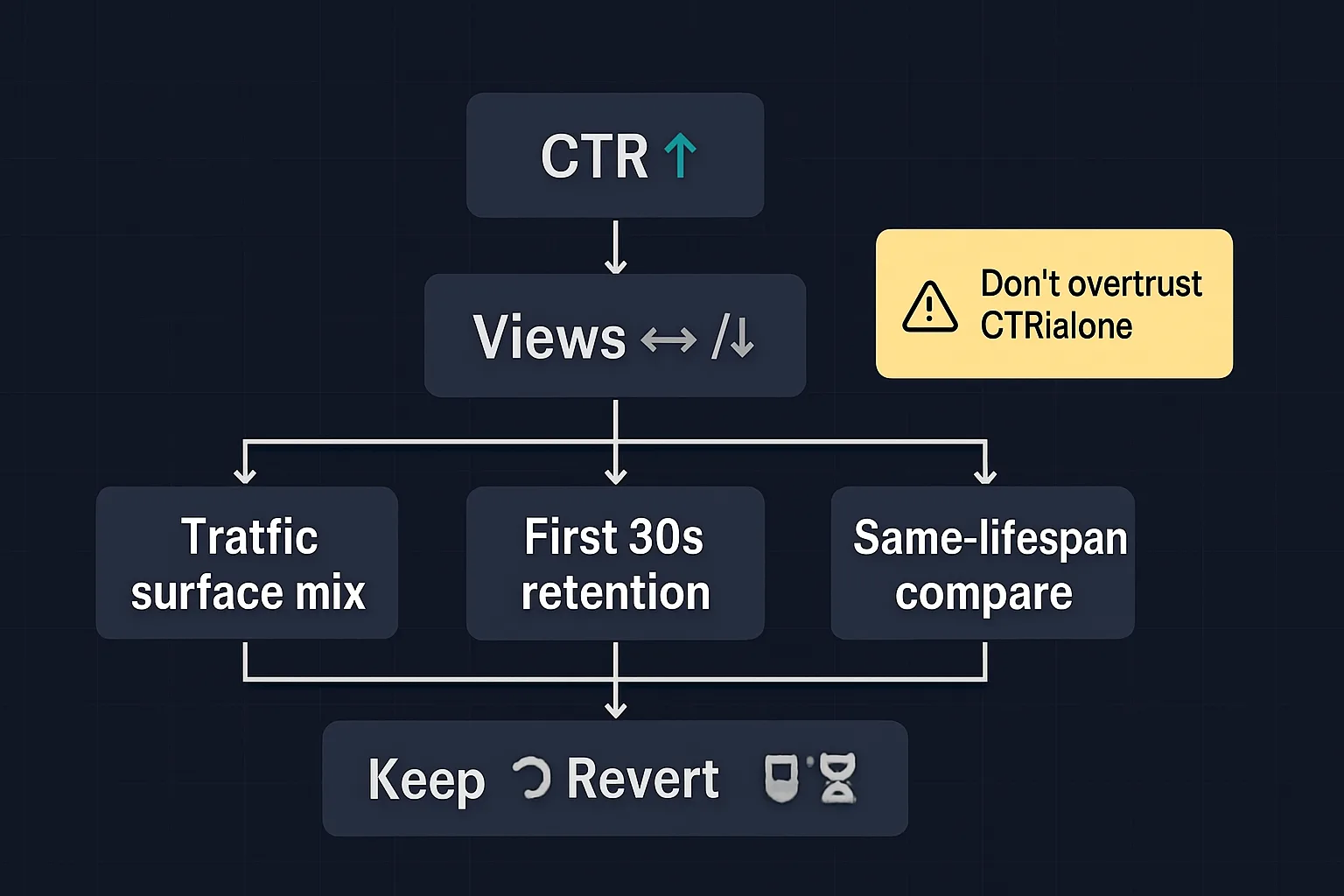
Compare videos at the same age—such as the same first 24-hour, seven-day, or 28-day window—rather than comparing a new upload with an older one that has had more time to accumulate views.
Check topic, series, traffic source, geography, seasonality, and packaging before attributing a difference to the publishing hour.
Ask whether the proposed day or cadence can be maintained without unreasonable pressure or a decline in production quality.
Compare like with like before changing the schedule
Equal-age comparisons make recent uploads more comparable because each has had a similar opportunity to gather views. YouTube Analytics supports windows such as 24 hours, seven days, and 28 days; these are comparison options, not universal test durations or proof thresholds. Equal-lifespan comparisons in Analytics are useful because they reduce one obvious source of distortion.
Next, separate formats and inspect discovery sources. Search, Suggested, playlists, and external sources are distinct traffic-source categories in Analytics, so compare them rather than treating all discovery as one pool. Geography, series, intended audience, topic longevity, and production cost can also define groups that are more comparable than the channel as a whole. These cuts help expose competing explanations; they do not eliminate every difference between videos.
Packaging is another reason not to assign a result to timing too quickly. Impressions measure how often thumbnails were shown on YouTube, while click-through rate measures how often viewers watched after seeing a thumbnail. If thumbnail exposure or the response to it changed, the evidence is not purely about publishing time. Neither metric alone proves recommendation reach or viewer satisfaction, but together they help locate where the viewing result changed.
Seasonality requires a wider comparison. YouTube recommends looking across longer periods or comparing the same period year over year to identify seasonal patterns and strategy effects. Seasonal patterns or other recurring changes in audience behavior may affect the surrounding conditions. A broad-period example in Analytics is not a mandatory waiting period; the comparison should fit the pattern being investigated.
Do not let one upload carry the decision. Group related content by format, series, audience, topic longevity, or production cost and look for patterns across multiple observations. Historical research also suggests caution when judging evergreen content from its early response because some videos continue attracting discovery after publication. That research is older and does not establish a current schedule rule, but it reinforces the distinction between launch performance and longer-lived discovery.
Cadence is an operating constraint, not just a timing choice
Changing a schedule also requires an operating assessment: consider the workload it would place on scripting, recording, editing, moderation, or coordination. Longitudinal research on YouTube channels has discussed increasing production pressure, while YouTube’s creator well-being guidance recommends reasonable goals, breaks, and attention to personal limits.
This is why “consistent” should mean repeatable in practice, not fixed at any cost. The supplied evidence does not show that a particular frequency is rewarded or that more frequent uploads cause faster growth. Capacity therefore belongs in the decision alongside performance evidence.
Make a bounded decision about the schedule
Keep the current time when the goal is ordinary-video long-term discovery and the case rests mainly on one upload, a heat map, or a mixed comparison. Unresolved differences in topic, packaging, traffic source, geography, format, or seasonality make a timing conclusion fragile.
Adjust event timing when the goal is Premiere or livestream attendance and audience context indicates a reasonable opportunity for viewers to participate. Evaluate the result with event-appropriate measures, such as attendance or live metrics, rather than relying only on ordinary upload views.
Make a channel-specific schedule change only when the outcome is explicit, comparable content and lifespan windows are available, competing explanations have been examined, and the new routine is sustainable. Treat the result as evidence about that channel and operating context—not as a universal best time to post.