A Short can outperform your usual reach while the channel’s deeper audience signals barely move. Views and subscribers may rise, but that does not show that viewers will return or watch beyond the original format. If YouTube Shorts viewers are not converting to subscribers—or new subscribers are not coming back—the useful question is not whether the Short “worked.” It is which audience signals changed after the spike.
Reach is only the first signal
Shorts Analytics describes the discovery event through metrics such as views, shown in feed, traffic sources, subscribers gained, and how many chose to view rather than swipe away. These numbers help explain distribution and immediate viewer response. They can show that a Short attracted attention or prompted a channel action, but none establishes a repeat audience by itself.
Start with several ordinary Shorts as your comparison set rather than using the channel’s biggest viral outlier as the baseline. YouTube recommends comparing content within the same format because viewer behavior differs between Shorts and regular videos.
What durable channel growth means
A subscriber count records a subscription, not ongoing viewing. YouTube presents monthly audience as a better estimate of active audience than subscriber count alone because subscribers may remain subscribed without watching every upload.
Monthly audience estimates the unique viewers who watched channel content during the previous 28 days and is recalculated daily. Returning viewers are people who previously watched the channel and returned during the selected period. Regular viewers reflect a longer pattern: people who watched the channel at least once per month for more than six months in the past year.
These measures answer different questions. Monthly audience asks whether the active audience is expanding. Returning viewers show whether people come back. Regular viewers add evidence of an established viewing habit. A low regular-viewer percentage can be common for newer, trending, and Shorts-heavy channels, so it is context—not a verdict on audience quality.
For the platform’s definitions and reporting context, see YouTube’s audience metrics.
Four signals to read together
Do not reduce these reports to one audience-quality score. Each signal group describes a different point between discovery and durable interest.
Acquisition tells you whether the Short earned attention in the feed and where viewers found it. A strong result means the clip reached people; it does not show that the topic created interest in the wider channel.
Active audience puts subscriber growth beside monthly audience. If subscribers rise while monthly audience remains nearly flat, the channel has not demonstrated a comparable increase in active viewing. That is a behavioral distinction, not evidence that those subscribers are inherently low quality.
Format fit appears in the Viewers across formats report, which shows the breakdown and overlap of viewers consuming videos, Shorts, and live streams. Overlap can support the interpretation that formats reach related audiences. It cannot identify every viewer who watched a Short and then completed a particular long-form session.
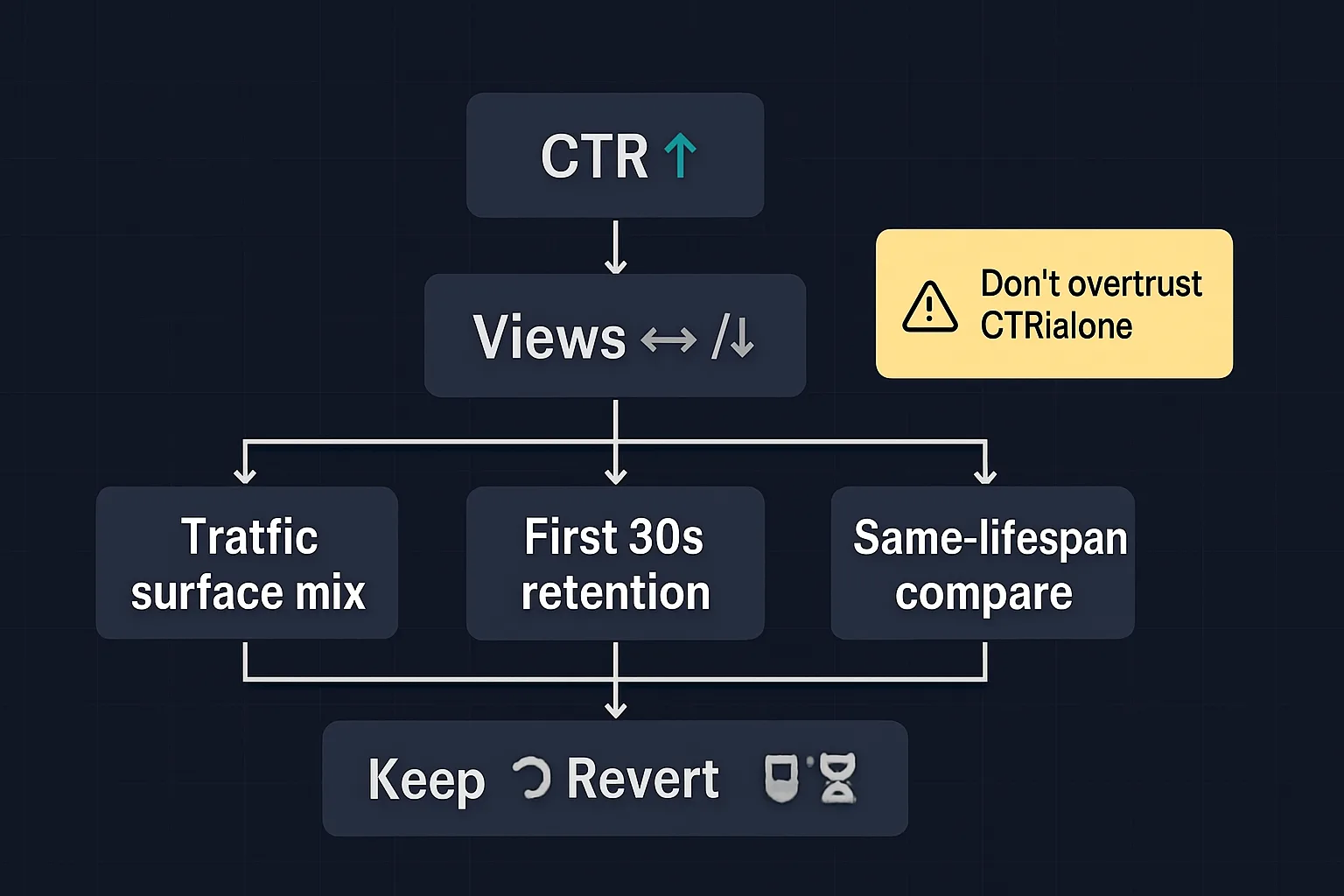
Repeat response requires later reporting windows. Compare a closely related long-form upload with comparable long-form videos over a similar lifespan. Keep the comparison format-matched; views, likes, and comments are not interchangeable evidence of audience durability.
One Shorts spike, two possible readings
Imagine a cooking channel publishes a Short demonstrating an unusual knife technique. It receives much more feed exposure than the channel’s typical Shorts and produces an unusually large subscriber increase.
In the first pattern, monthly audience and returning viewers remain flat. The Viewers across formats report shows little additional overlap with videos, and a related long-form lesson performs within its normal range. The cautious conclusion is limited: the Short created a successful discovery event, but the surrounding active audience did not visibly expand.
In the second pattern, the creator publishes a closely related lesson. During later reporting windows, monthly audience grows, returning viewers increase, format overlap strengthens, and the lesson performs above a recent format-matched baseline. Together, those changes make audience fit more plausible than subscriber growth alone. They still do not prove that every new subscriber watched the lesson.
Mixed results are informative too. Returning viewers may rise because people continue watching Shorts while long-form performance remains ordinary. Overlap may increase without an established repeat habit. Ask what changed, how long it lasted, and whether the follow-up addressed the same viewer need.
Use the result to shape the next test
If a Short and a longer video address the same topic, give interested viewers a clear route to the related content. Creators with advanced feature access can add a related video link on a Short. The destination can be a public or unlisted video, Short, or live stream, and the link appears below the channel handle in the Shorts player.
Treat that link as an experiment variable, not proof of a funnel. When possible, compare closely matched Shorts and related destinations over a consistent period. Preserve the spike window for later review, check current Studio labels and report availability, and use Advanced Mode for more detailed comparisons or exports when available. Some reports may be limited or unavailable on mobile.
Independent evidence on Shorts and long-form outcomes is mixed and observational. A study reported an overall decline in long-form views after creators began publishing Shorts, while other analyses found results varied by channel, topic, audience, content mix, and period. These findings cannot establish that Shorts caused either growth or decline, and they do not provide a universal Shorts-to-long-form conversion rate.
Check the Shorts view definition
Beginning March 31, 2025, Shorts views began counting starts and replays without a minimum watch-time requirement. The prior view measure remains available as Engaged views. Current Shorts totals may therefore not be directly comparable with older reports that used the previous counting method.
Keep date ranges and metric definitions consistent when reviewing a spike. A historical conversion rate built from mixed view definitions can create precision that the underlying data does not support.