Ranking on YouTube is no longer about guessing keywords or copying competitors blindly. Successful creators rely on real search data, search intent, and SEO patterns that YouTube already rewards.
This is why using a YouTube keyword research tool is essential for sustainable channel growth.
One example is the YouTube SEO Intelligence tool available at
? https://www.viewgrip.net/tools/intelligence
which focuses on analyzing real YouTube search results instead of estimates.
Why Keyword Research Matters for YouTube SEO
YouTube functions as a search engine. Every ranking decision is influenced by relevance, engagement signals, and how accurately a video matches user intent.
Without proper keyword research, creators often:
- Target keywords with overwhelming competition
- Miss long-tail search opportunities
- Over-optimize or under-optimize titles and descriptions
- Spend time on content that never gains visibility
A data-driven keyword research approach helps eliminate these issues.
How This YouTube Keyword Research Tool Works
The tool analyzes top-ranking YouTube videos for a given keyword and evaluates real SEO and performance signals, including:
- Title and description keyword placement
- Semantic relevance and contextual phrases
- Tags used by ranking videos
- Views, engagement, and daily growth speed
- Video age and duration patterns
All insights are extracted directly from live YouTube search results, not from generic keyword databases.
Understanding Competition and Ranking Opportunity
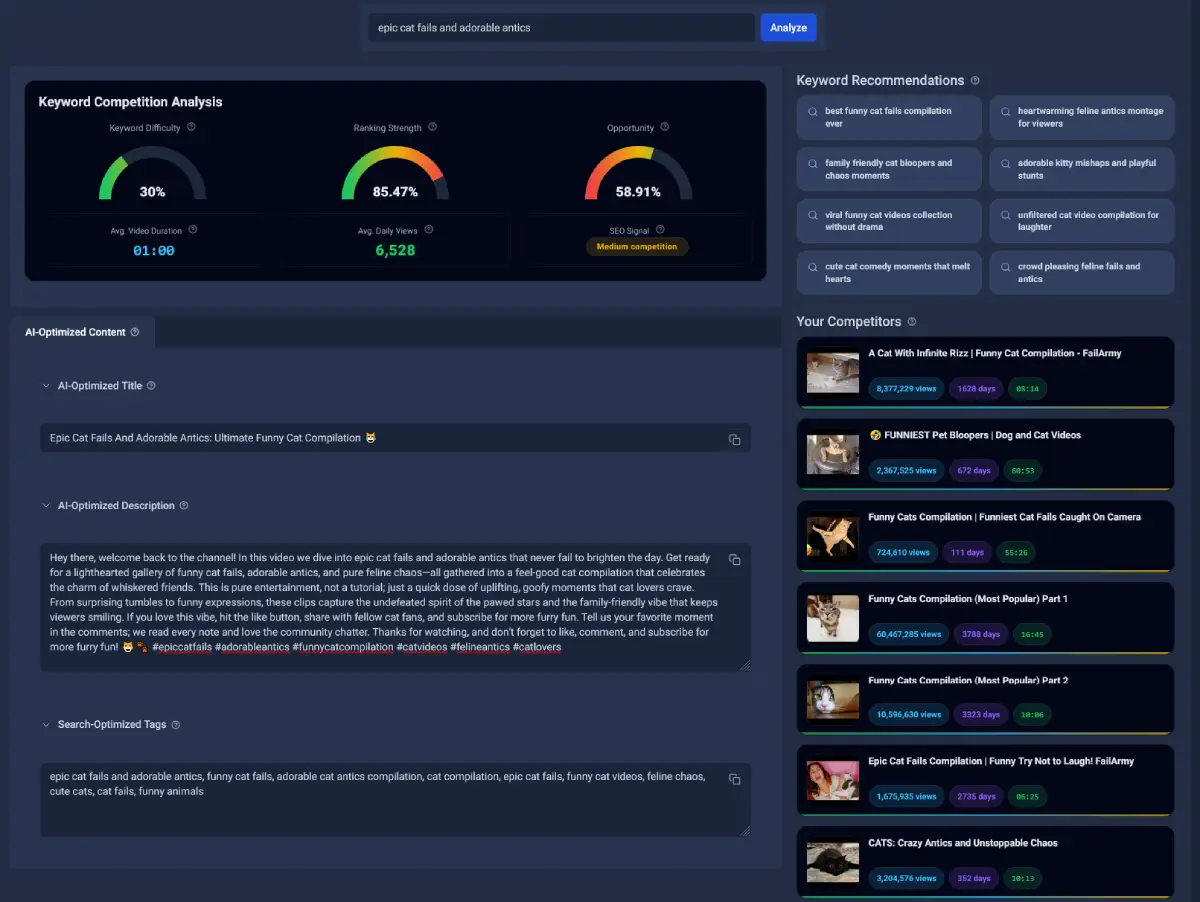
Each keyword is evaluated using multiple synchronized metrics:
Keyword Difficulty
Keyword difficulty measures how strongly competitors are optimized for the same topic. It considers exact matches, semantic coverage, and keyword context.
Ranking Strength
Ranking strength reflects how powerful current competitors are, based on engagement, view velocity, and content depth signals.
Opportunity Score
The opportunity score combines difficulty and ranking strength to indicate how realistic it is to rank for a keyword.
Higher scores signal better ranking potential with lower competition.
Screenshot: Keyword Analysis Interface
How Titles Are Generated
Titles are generated by reverse-engineering what already ranks on YouTube.
The system analyzes competitor titles to identify:
- Keyword positioning patterns
- Emotional and curiosity-driven hooks
- Semantic keyword combinations
- Natural language structures that attract clicks
The generated titles follow proven CTR structures while remaining original and natural.
How Descriptions Are Generated
Descriptions are designed to support both YouTube SEO and viewer engagement.
They are created by analyzing how top-ranking videos structure their descriptions, including:
- Semantic keyword clusters
- LSI phrases related to the main topic
- Natural conversational tone
- Paragraph flow commonly used by ranking content
This approach helps YouTube understand context without keyword stuffing.
How Tags Are Selected
Tags are generated based on real SERP and competitor patterns, including:
- Core keyword relevance
- Long-tail search queries
- Semantic variations used by ranking videos
- Supporting phrases that reinforce topical authority
Tags are optimized for discoverability while staying aligned with YouTube’s content classification system.
Adaptive Strategy Based on Competition Level
When a keyword shows high competition, the tool avoids generating titles and descriptions and instead focuses on long-tail keyword opportunities with lower competition.
When competition is low or medium, it generates:
- SEO-optimized titles
- Natural descriptions
- Relevant tags
- Additional keyword recommendations
This adaptive behavior helps creators focus effort where ranking is realistic.
Built for Evergreen YouTube Growth
The tool intentionally avoids:
- Years and time-based terms
- Seasonal or trend-driven keywords
- Temporary spikes in search interest
All recommendations are evergreen, making them suitable for long-term YouTube traffic and consistent rankings.
Final Thoughts
Effective YouTube SEO starts with understanding how search results are structured, not with guesswork.
By analyzing real competitor data, semantic patterns, and ranking signals, tools like YouTube SEO Intelligence
(https://www.viewgrip.net/tools/intelligence)
help creators make informed decisions, select better keywords, and produce content that aligns with how YouTube actually ranks videos.
For creators focused on sustainable growth, this approach turns keyword research into a clear and repeatable SEO strategy.