Growing subscribers on YouTube is not simply about increasing views. Many channels attract traffic but struggle to convert viewers into long-term followers.
The difference is not random. It comes from how viewers evaluate a channel after watching—not just the video itself, but whether the channel is worth returning to.
YouTube’s system supports this process, but it does not create it. The decision to subscribe is driven by user perception, trust, and repeated positive experiences.
Understanding this is the foundation of gaining free YouTube subscribers consistently.
Definition of Free YouTube Subscribers
Free YouTube subscribers are users who choose to follow a channel without paid promotion, based on genuine interest in the content.
Unlike views, a subscription is a high-intent action. It signals that the viewer expects future value, not just a one-time benefit.
When someone subscribes, it usually means:
- the content delivered what was promised
- the viewer sees long-term relevance
- the channel has a clear and consistent direction
Because of this, subscriber behavior is closely tied to how YouTube evaluates channel quality over time.
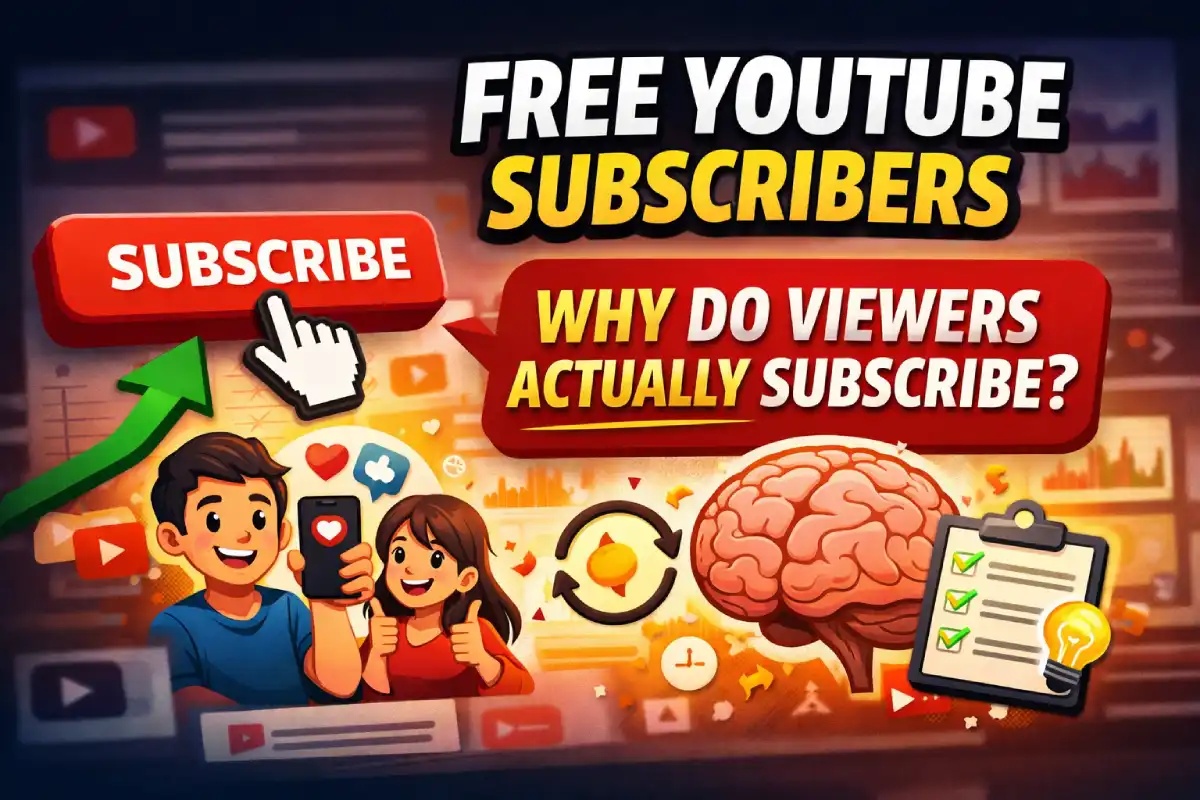
Why Viewers Decide to Subscribe (Beyond the Algorithm)
Subscribing is not a technical outcome—it is a decision.
Before clicking the subscribe button, viewers subconsciously ask:
“Is this channel worth coming back to?”
This decision is influenced by several deeper factors.
Expectation of Future Value
Viewers subscribe when they believe your future content will consistently provide value. This expectation is built through clarity—clear topics, consistent messaging, and predictable outcomes.
If your content feels random or inconsistent, the viewer has no reason to subscribe.
Trust Built Through Repetition
Most people do not subscribe after watching a single video. They subscribe after multiple positive experiences.
Each video acts as a validation point. When those experiences are consistent, trust forms—and subscription becomes a natural step.
Identity and Interest Alignment
Viewers are more likely to subscribe when your content aligns with their interests or identity.
This is why niche channels often grow faster. The content speaks directly to a specific audience, making the decision to subscribe easier.
How Free YouTube Subscribers Actually Grow Over Time
Subscriber growth is not immediate. It develops through repeated exposure and consistent performance.
At the beginning, YouTube is still testing how viewers respond to your content across multiple videos. During this phase:
- viewers may watch but not subscribe
- the system collects behavior data
- patterns are not yet established
Over time, YouTube begins to identify:
- which viewers return
- which videos lead to deeper engagement
- which sessions extend beyond a single video
Once these patterns become consistent, the system increases distribution to similar audiences.
A key metric here is subscriber conversion rate—how many viewers decide to subscribe after watching.
Channels with strong conversion signals grow faster, even with fewer total views.
Why Most Views Do Not Turn Into Subscribers
Not every view is meant to become a subscriber.
In many cases, viewers are only trying to solve a specific problem. Once they get what they need, they leave.
This usually happens when:
- the content answers a one-time question
- the channel lacks a clear focus
- there is no reason to explore more videos
From YouTube’s perspective, this creates weak return signals. Without repeated engagement, subscriber growth remains limited.
Understanding this helps shift focus from “getting views” to building reasons to return.
Step-by-Step Strategy to Get Free YouTube Subscribers
Step 1 — Deliver Clear Value Immediately
Viewers decide quickly whether your content is worth their time. The opening moments should clearly communicate what they will gain.
Step 2 — Create Topic Consistency
A clear and consistent topic makes your channel easier to understand. When viewers know what to expect, they are more likely to subscribe.
Step 3 — Design for the Second Video
Subscriptions often happen after a viewer watches more than one video. Structuring your content to naturally lead into another video increases conversion probability.
Step 4 — Reduce Decision Friction
If viewers are unsure what your channel is about, they hesitate. Clear positioning and consistent messaging remove that friction.
Step 5 — Build Retention Across Multiple Videos
High retention across different videos signals that your content delivers consistent value. This strengthens both recommendation and subscription likelihood.
Step 6 — Generate Early Interaction Data
Without early engagement, YouTube cannot identify which viewers are likely to subscribe.
This is why initial exposure matters—it allows the system to detect patterns and expand reach to the right audience.
To support this early phase, some creators use platforms designed to increase youtube subscribers and connect content with active viewers.
FAQ About Free YouTube Subscribers
How can I get free YouTube subscribers without ads?
Focus on consistent value, viewer retention, and encouraging multi-video sessions. These factors increase the likelihood of subscription.Why do some videos get views but no subscribers?
Because viewers may only need a single piece of information and see no reason to return.Do subscribers affect video performance?
Yes. Subscribers contribute to return viewer signals, which influence how content is recommended.What matters more—views or subscribers?
Subscribers indicate long-term value, while views indicate short-term reach. Both are important, but subscribers reflect deeper engagement.Can new channels grow subscribers quickly?
Yes, if they create strong viewer experiences and encourage repeated interaction.
Why Subscriber Growth Feels Slow at First
Subscriber growth often feels slow because it depends on trust, and trust takes time.
Most viewers need multiple interactions before deciding to follow a channel. This is normal behavior, not a limitation of the platform.
Channels that grow consistently are not those that chase quick results, but those that create repeatable value.
When viewers return, stay longer, and continue engaging, subscriptions follow naturally.
In the long run, growth is not determined by how many people watch once—but by how many choose to come back.